SBI Clerk 2026 Preparation: A Phase-by-Phase Study Plan
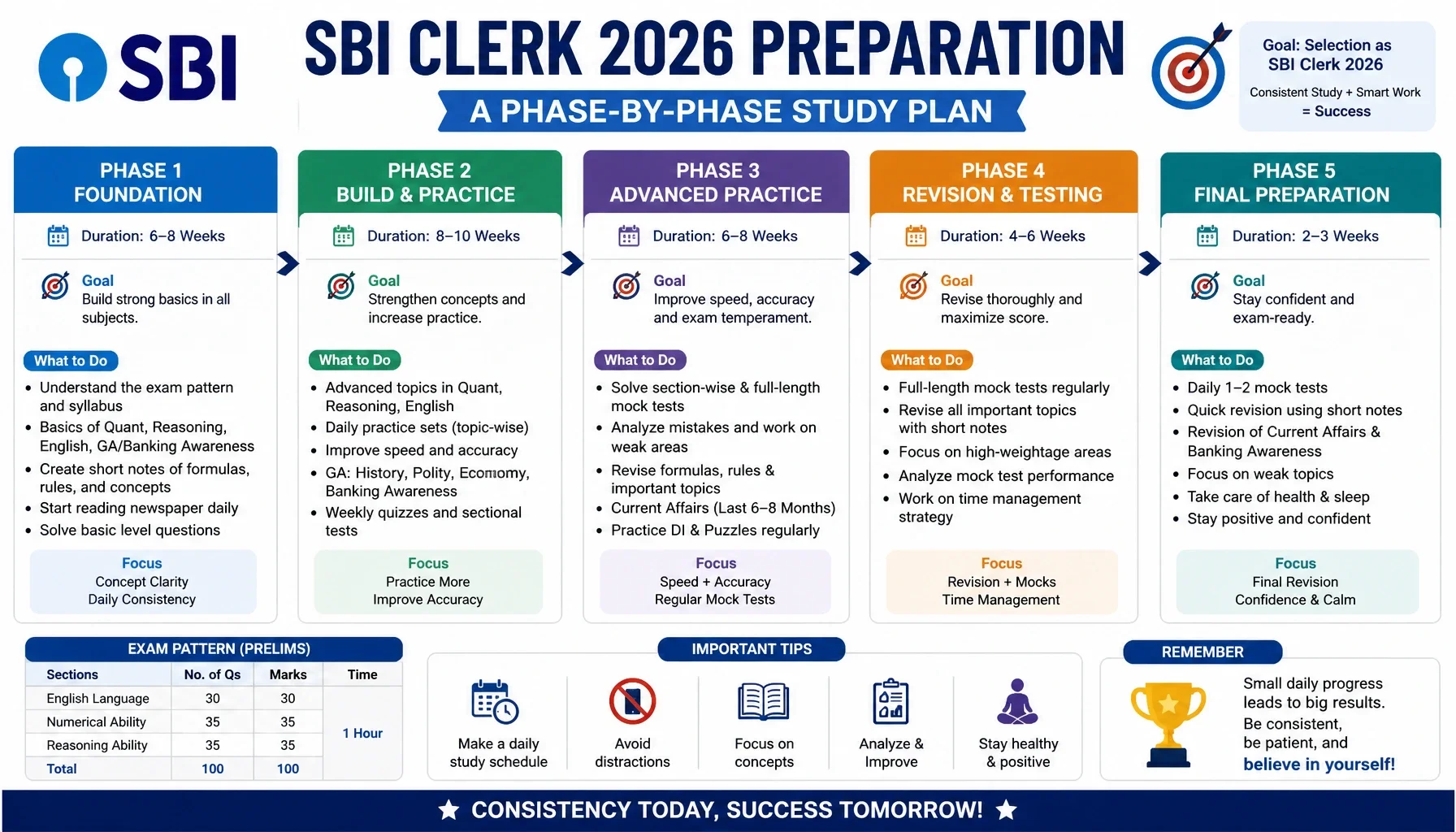
Most candidates who fail SBI Clerk 2026 did not study too little — they studied in the wrong order, or left mock tests until it was too late to fix anything. The plan below is built to avoid both.
Quantitative Aptitude — Calculation Speed And Data Interpretation Decide The Mains Score is where the majority of candidates lose marks — plan for it rather than avoiding it. The phases below run from covering the syllabus to pure revision.
Table of Contents
In short
Exam
SBI Clerk (Junior Associate) Exam
Conducted By
State Bank of India (SBI)
Subjects
English Language, Numerical Ability, Reasoning Ability, General/Financial Awareness, Quantitative Aptitude and Reasoning & Computer Aptitude
Time Available
6 months to 1 year — the plan is written around this
Daily Study
5 to 6 hours for a full-time aspirant, 3 hours alongside a job
How to Tackle Each Subject
| Subject | How to Approach It | Daily Time |
|---|---|---|
| Numerical Ability / Quantitative Aptitude | Memorize tables up to 20, squares up to 30, cubes up to 20. Solve 15-20 problems daily from percentages, averages, ratios, and proportions. Start with simple DI sets and move to multi-graph sets — accuracy first, then speed. Give 20 minutes daily to number series and simplification. | 90 minutes |
| Reasoning Ability | Start with 2-variable puzzles, then complex multi-variable ones. Practice circular, linear, and rectangular seating arrangements. Use Venn diagram methods for syllogisms; cover inequalities, assumptions, and letter/number/symbol coding daily. | 75 minutes |
| English Language | Read editorials from The Hindu or Indian Express daily; practice identifying main idea, tone, and purpose. Learn 10-15 new words daily with synonyms, antonyms, and usage. Revise tenses, prepositions, and subject-verb agreement, and practice error spotting. Summarize news articles to build writing skill. | 60 minutes |
| General/Financial Awareness | Read daily current affairs from trusted sources. Focus on government schemes, awards, appointments, and sports. Learn banking terminology, monetary policy, RBI functions, digital banking, and recent mergers. Memorize capitals, currencies, and national parks. | 45 minutes |
| Reasoning & Computer Aptitude (Mains) | Extend prelims reasoning practice to higher-difficulty puzzle sets, and cover computer fundamentals alongside — this section carries the highest weight (60 marks) in Mains. | 30 minutes |
SBI Clerk 2026 — Study Plan by Phase
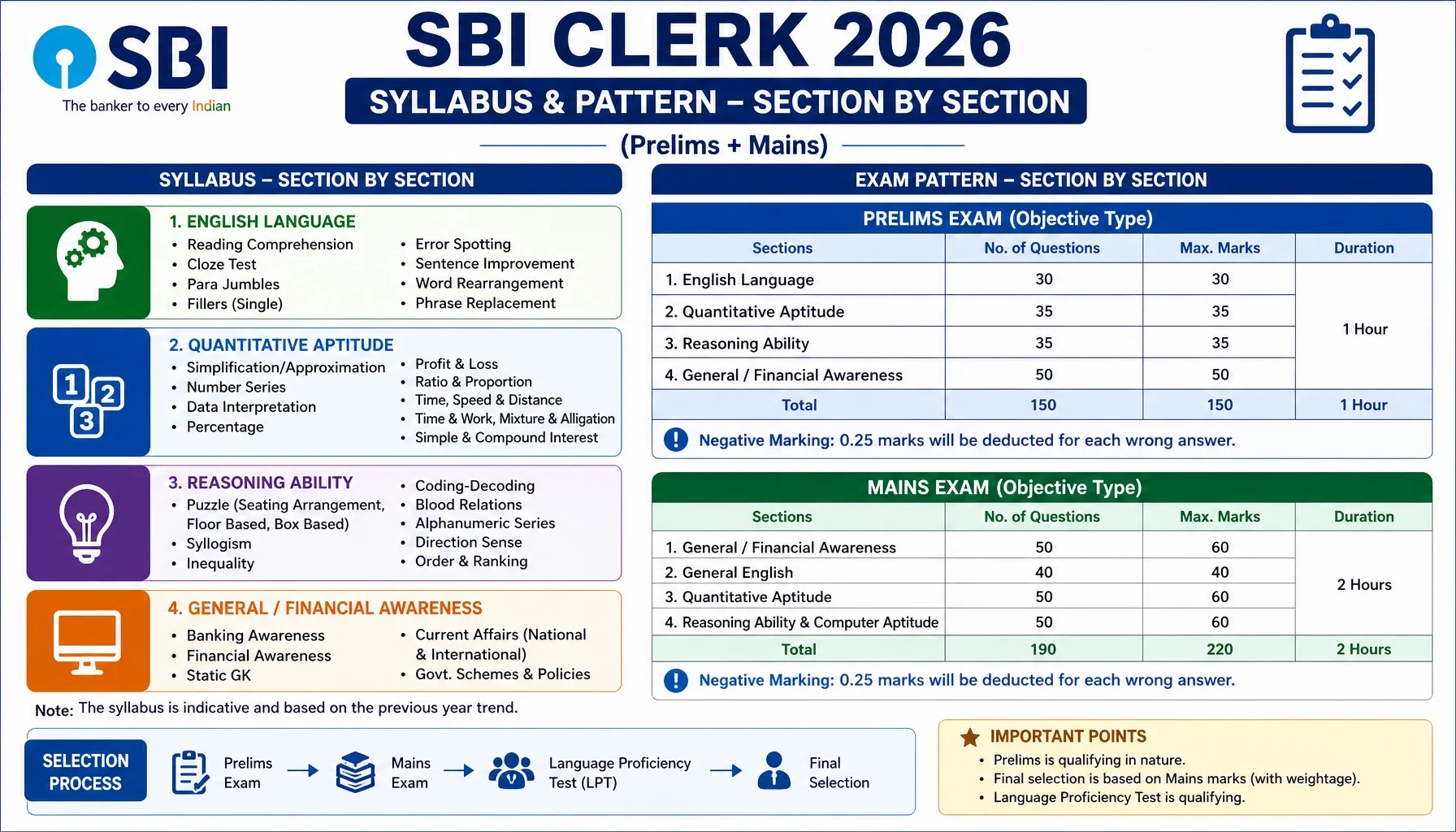
| Phase | Duration | Focus | Target |
|---|---|---|---|
| Phase 1 — Foundation Building | First 8 weeks | Understand the latest exam pattern and syllabus; master the basics of every topic from trusted sources; solve basic-level problems daily | Every topic of prelims and mains syllabus covered once with clear concepts |
| Phase 2 — Skill Building | Next 8 weeks | Strengthen conceptual understanding, improve speed with shortcuts, and enhance accuracy through sectional practice | Accuracy above 85% in sectional tests; shortcuts internalised for maths and reasoning |
| Phase 3 — Mocks & Analysis | Next 4 weeks | Full-length mocks and previous year question papers with detailed analysis of every attempt | Two full mocks a week, each analysed; weak areas identified and reworked |
| Phase 4 — Revision | Final 4 weeks | Revise only from your formula, vocabulary, and current affairs notebook; no new topics or new books | Entire notebook revised twice; time management strategy locked for exam day |
If time is shorter than this plan assumes, compress the foundation phase. Never compress the mock and revision phase.
The Section That Decides It
Quantitative Aptitude — calculation speed and Data Interpretation decide the Mains score separates the candidates who clear from the ones who nearly do. Daily contact beats occasional marathons here.
What a Study Day Looks Like
| Time | What to Do |
|---|---|
| 6:00 to 7:30 AM | Quantitative aptitude — fresh mind on the hardest subject |
| 7:30 to 8:00 AM | Newspaper editorial reading (The Hindu / Indian Express) for English and current affairs |
| 9:00 to 10:15 AM | Reasoning ability — puzzles and seating arrangements |
| 10:30 to 11:30 AM | English language — vocabulary (10-15 new words), grammar, and error spotting |
| 4:00 to 4:45 PM | General/Financial awareness — current affairs, banking terms, RBI and schemes |
| 5:00 to 6:00 PM | Mock test or sectional test / previous year paper |
| 6:00 to 6:30 PM | Analysis of the mock — note mistakes and weak areas |
| 9:00 to 9:30 PM | Revision from the formula, vocabulary, and current affairs notebook |
Preparing While Working
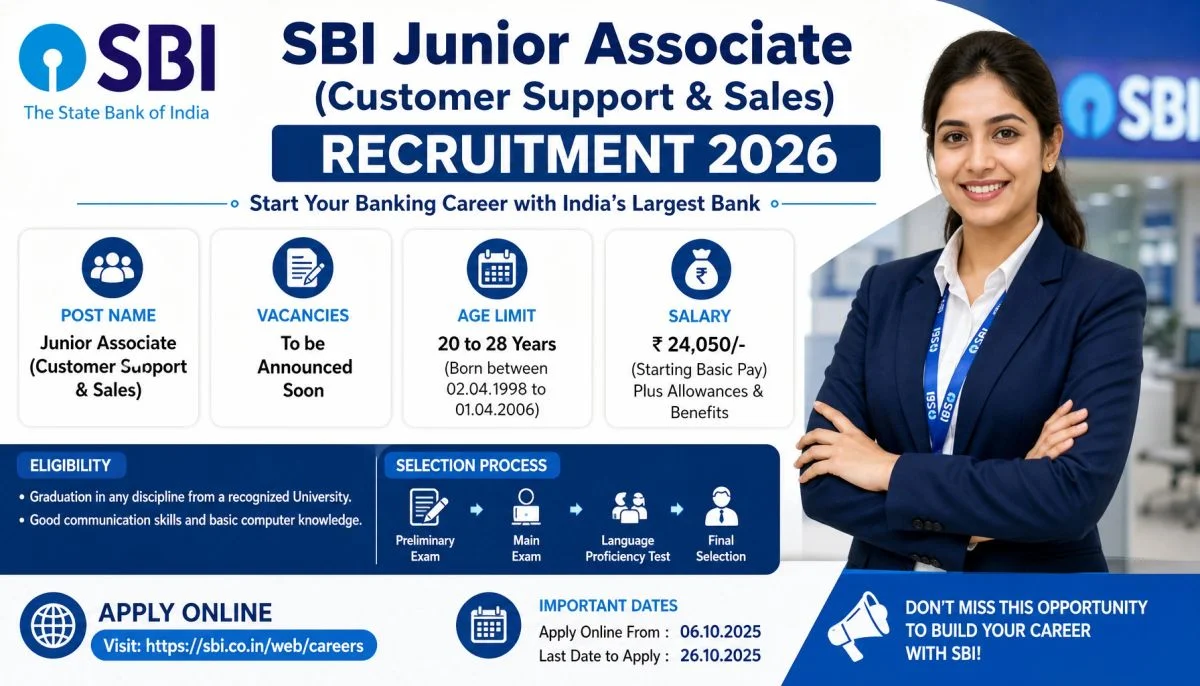
Prelims marks are not counted in the final merit, but do not treat prelims lightly — clearing the concepts of all three prelims subjects is what lifts your Mains score.
How to Use Mock Tests
Attempt mock tests and previous year papers regularly from the start. Solve easier questions first, skip questions that eat time, and study the detailed analysis report of every test to map strengths and weaknesses section by section.
A mock you do not analyse is a wasted afternoon. Spend as long reviewing a test as you spent taking it — the marks are in the review, not the attempt.
How to Revise
Maintain a dedicated notebook for formulas, vocabulary, and current affairs notes. Revise from it whenever you find time — daily short revisions beat weekend marathons.
Which Books to Use
| Subject | Book | Author |
|---|---|---|
| Reasoning Ability | A Modern Approach to Verbal and Non-Verbal Reasoning | R S Aggarwal |
| Quantitative Aptitude | Quantitative Aptitude for Competitive Examinations | R S Aggarwal |
| English Language | Word Power Made Easy | Norman Lewis |
| English Language | Objective General English | S P Bakshi |
| Data Interpretation | How to Prepare for Data Interpretation for CAT & Banking Exams | Arun Sharma |
| General/Financial Awareness | Banking Awareness | Arihant Experts |
| All Subjects + Mocks | SBI Clerk Prelims & Mains Guide with Previous Year Papers | Adda247 Publications |
Finishing one standard book cover to cover is worth more than sampling five. Resist the urge to buy your way out of a plateau.
Where to Practise for Free
- The Hindu and Indian Express editorials
- SBI Clerk previous year question papers
- Mock test series with detailed analysis reports
Common Mistakes in SBI Clerk Preparation
- Starting mock tests too late
- Ignoring the latest exam pattern and syllabus
- Reading without revising
- Skipping the detailed analysis after every mock
- Attempting time-consuming questions instead of skipping them
- Preparing without knowing your own strengths and weaknesses
Syllabus and Practice Links
Adapt the plan to your own starting point and time. Confirm the syllabus and pattern against the official notification before planning around them.

Source: the official State Bank of India (SBI) notification.

Comments